Executive summary
A study of 250 U.S. emerging adults associated greater use of social media for anxiety information with lower anxiety knowledge and documented both adaptive and maladaptive coping strategies encountered online.
Method
Critical reflection on a peer-reviewed cross-sectional study, with attention to source type and study limitations.
What the evidence suggests
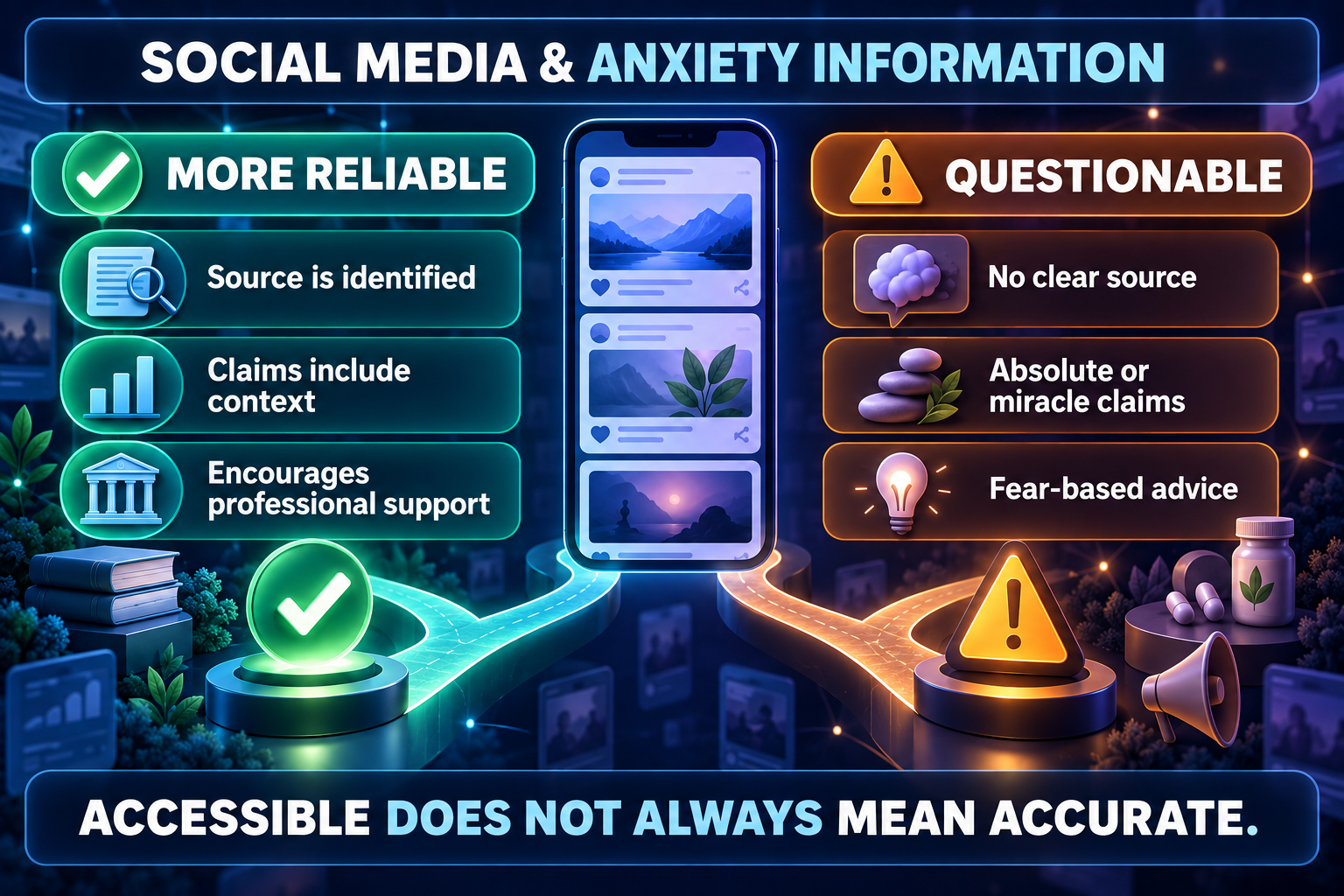
Access is not accuracy
Easy discovery and high engagement do not guarantee complete, contextual, or clinically appropriate guidance.
Source type matters
The relationship with knowledge varied according to the accounts participants followed.
Design can support literacy
Platforms can make credentials, evidence, and sensitive-content context easier to recognize.
Practical test protocol
- 01Check author credentials and original sources.
- 02Distinguish personal experience from general evidence.
- 03Compare sensitive claims with reputable health guidance.
- 04Do not treat a popular post as individualized professional advice.
Information quality should be evaluated by evidence and context—not popularity or presentation.
Limitations
The study was cross-sectional, so it identifies associations and cannot establish that social-media use caused lower knowledge.